There are films that disturb you, and then there are films that change you. The Voice of Hind Rajab (Palestinian Movie) is the second kind. I watched the docudrama on Hulu and sat down to write this review. This is not a review of the politics of the War, but about its tragedy. As Tolstoy said in War and Peace, “If everyone fought for their own convictions, there would be no war.”
The Gaza war is the backdrop for this movie. On January 29, 2024, a six-year-old Palestinian girl named Hind Rajab was trapped in a car in Gaza. Israeli forces opened fire on the vehicle carrying her family and everyone else in the car was killed. For hours, Hind stayed on the phone with volunteers at the Palestine Red Crescent Society. She kept pleading for help that would never arrive. Tunisian director Kaouther Ben Hania has built her shattering new film around that phone call. Around the desperate adults on the other end of the line who couldn’t save her.
What the Film Is — and Isn’t
Let’s be clear about what Director Ben Hania is doing here, because it matters. The Voice of Hind Rajab is not a war film. There are no battlefield sequences, no graphic violence, no images of rubble or bodies. This is a movie about a young girl trapped in a car in the middle of a battlefield. The futility of that war, and the tragedy of life. It is not about who is right, but what is wrong. It is about war and peace.
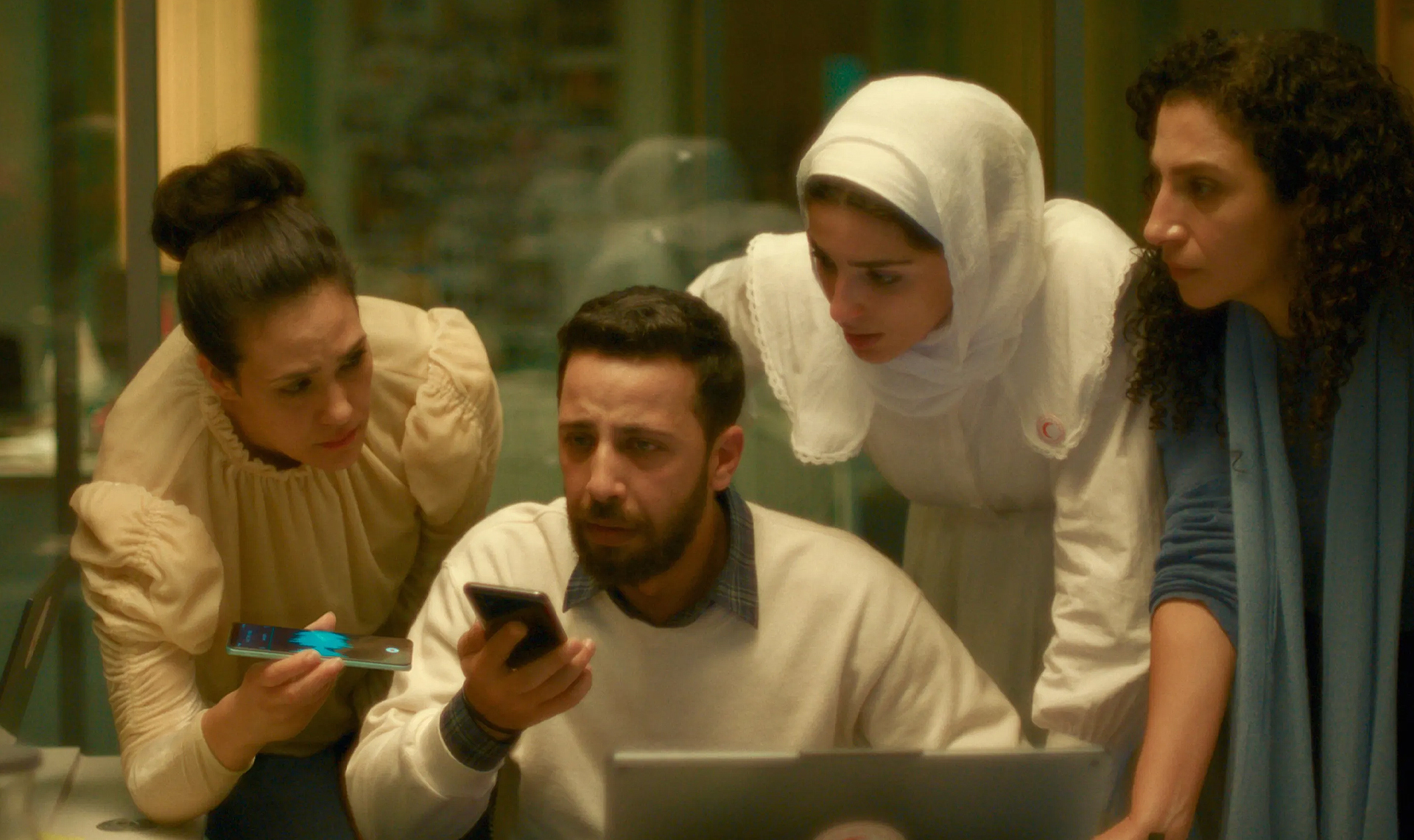
The entire film is set within the beige offices of the Red Crescent call center in Ramallah — over 80 kilometers from Gaza, because Israel’s bombardment had destroyed all phone lines in the territory itself.
It is, in essence, a single-location thriller — except the stakes are real, the voice on the phone is real, and the outcome is already known. Ben Hania integrates the actual audio recording of Hind’s final calls into a dramatized reconstruction, with actors speaking and reacting to the child’s own words. Hind herself is never seen; she exists only as a voice, and in one archival photograph pinned to the call-center wall.
This choice is both formally daring and morally necessary. To show Hind — to dramatize her death — would risk sensationalizing the unspeakable. By keeping her off-screen, Ben Hania preserves both Hind’s dignity and the audience’s imagination, which fills the silence with something far more powerful than any image could provide.
The Impossible Geography of War
One of the film’s most quietly devastating revelations is logistical. The volunteers on the phone desperately want to send an ambulance. But under the conditions of Israel’s siege of Gaza, sending rescue vehicles is not simply a matter of driving somewhere. Every route must be submitted and approved by the Israeli military. Only the Jordanian government is authorized to negotiate those approvals. The chain of bureaucracy between a child’s voice and a rescue vehicle is long, slow, and, in this case, fatal.
The film conveys the full absurdity and horror of this system without editorializing. We simply watch the clock, follow the cursors on digital maps as they inch through destroyed streets, and listen to the voice on the phone grow quieter with fear.
Direction and Craft
Ben Hania, best known for her Oscar-nominated documentary Four Daughters, brings the same hybrid instinct to this film — blurring the line between document and drama until the distinction dissolves. The result, which critics have called a new kind of cinema, is something closer to a sustained act of witness than a conventional narrative.
The cinematography favors long takes that make every minute feel like an eternity. The editing builds dread not through cutting, but through reluctance to cut — through staying in the room, staying on a face, staying with the voice. The sound design is extraordinary: silence weaponized, distant noise threatening, and at the center of it all, one small voice that cuts through everything like a knife.
The film is at its most devastating when it trusts its audience and steps back. It is slightly less powerful when it reaches for the tearjerker register. But even at those moments, the emotional logic is sound: these people were desperate and frightened, and Ben Hania is faithful to that.
The Performances
The ensemble of Palestinian actors carries an almost unbearable weight. Their task is to make real grief and real helplessness legible on screen while reacting to audio that they — and we — know ends in death. There’s no triumphant ending, no catharsis to perform. What they offer instead is something rarer: the texture of people doing the right thing in a situation designed to prevent the right thing from being done. Their performances, raw and occasionally overheated, feel less like acting and more like testimony.
Final Thoughts
“War and Peace” is not an academic debate. It is the existential question of the day. More than a year after the film’s premiere, with the conflict in Gaza ongoing, Hind Rajab’s story remains present tense. This is not historical cinema. It is cinema about now — about what is happening, what has been allowed to happen, and what it costs when the world takes too long to listen.
Watch it. Then sit with it. Then do not let yourself forget.


Let us know what you think about this post