“Violence produces only something resembling justice, but it distances people from the real thing” – Leo Tolstoy
Let me confess upfront that I am no fan of sectarian historiography. There is much to be said for the political motives behind the making of Dhurandhar. But this is not a political blog, so I will resist the temptation to engage in polemics.
A film in two parts that arrives with the swagger of an epic and the weight of a political statement, Dhurandhar stands at the intersection of hubris and controversy. Its violence is cringe-inducing, its ambition unmatched by its content.
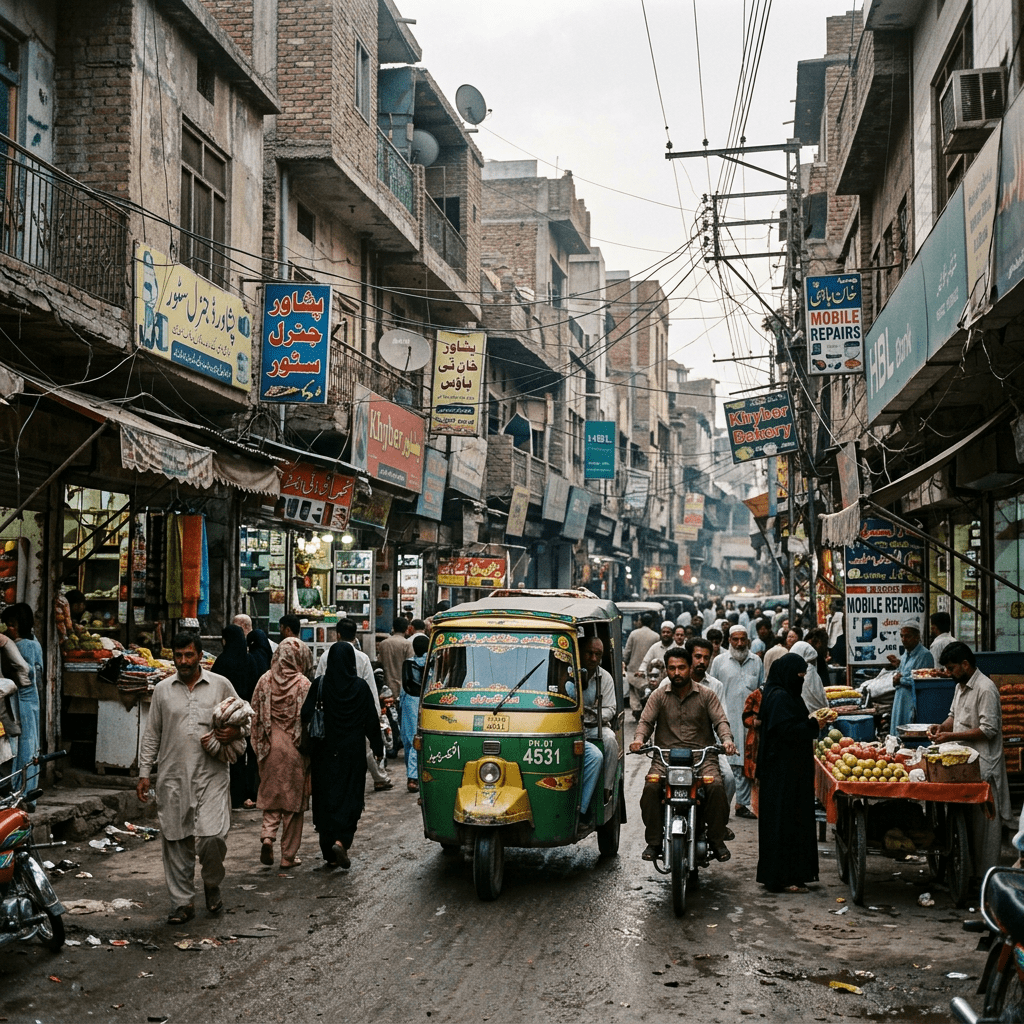
To be fair, the movie has all the elements of a blockbuster – compelling revenge motive, redemption of a death row inmate, fast paced and slick non-linear narration, tightly scripted high impact action choreography, effective use of the squalor of urban landscapes to create the gritty ambience of a spy thriller. And good acting by Ranveer Singh. But sadly, he was the lone exception, with a possible “also ran” by Akshaye Khanna.
Cinematically speaking, however, Dhurandhar fails at many levels.
At its core, it is a wannabe spy thriller loosely based on real events that tries to overwhelm the audience with its intensity. To paraphrase the bard, “if intensity be the food of thrill, give me excess of it, that. surfeiting, the appetite may sicken and so die”.
Throughout the movie, director Aditya Dhar builds up this intensity through tried and tested techniques like close-quarters combat, slick chase sequences, rapid cross-cutting between parallel events, great sound effects and above all, a primal animalistic violence that is intended to stun the audience with its gruesomeness.
All it does, however, is to numb your sensibilities if the cringe didn’t get you. Whether it is the public bludgeoning of Babu Dakait’s head by Rehman Baloch, or the scene where Uzair Baloch brandishes the severed head of Arshad Pappu in front of all of Lyari to declare that he is now the undisputed leader of Lyari, the violence is gratuitous without having any redeeming value.
Beyond the violence, the movie fails at its most basic purpose, i.e., storytelling. Connections between characters feel schematic. Bonds are asserted rather than developed through shared moments, gestures, or evolving dynamics. As a result, emotional stakes feel conceptual rather than felt.
Yalina, an accomplished doctor, falls in love with a gang member, and goes to great lengths to protect his identity. But the movie had no space for the development of the unlikely romance.
S.P. Choudhary switches back and forth between being a fierce police officer and “bade saheb’s” henchman without any explanation of what drove him to either decision.
In fact, none of the characters show any real emotion, other than the wife of Rehman Baloch when she learns about her son’s death.
Most characters operate as roles — the spy, the handler, the antagonist, the informant — rather than as people with inner contradictions or emotional histories. Their motivations are stated, not explored, leaving little room for nuance.
Moments that should deepen character — grief, fear, doubt, loyalty — are often compressed into brief exchanges or stylized flashbacks.
An excellent contrast from this point of view is Meghna Gulzar’s “Raazi“. The basic premise is the same – Indian covert operations team finds an unlikely candidate to infiltrate into enemy territory to gather critical intelligence in the face of impending hostilities.
In both cases, the novice protagonist is trained in the art of information gathering and the skills to detect danger and to protect themselves before they are dispatched into hostile territory. In both cases, the protagonist succeeds against all odds, and in each case they are shown committing unspeakable crimes in pursuit of their goals.
But in the case of Raazi, every character on either side of the border is a flesh-and-blood human being with emotions, motives and personalities. Every key character has a significant role in developing the story further, rather than being just a prop to highlight the heroism of the protagonist. The conflicts, the sentiments, the feelings that the characters experience towards one another – be it love, suspicion, respect, friendship or even basic interest in each other’s well-being – are all grounded in realistic human interactions and not stock stereotypes to suit a narrative.
In Raazi, Sehmat is depicted as going through an intense conflict as she kills Abdul, the loyal servant, to protect her secret. In sharp contrast, in Dhurandhar, Hamza nonchalantly blows up of a building with a person trapped inside without batting an eyelid.
Meghna is focused on the human cost of death in Raazi, while in Dhurandhar, Aditya treats that scene as merely a milestone in Hamza’s ascent in the Balochi gang of Lyari.
For me the final nail in the coffin was the excruciatingly painful manner in which the final half hour of the second half of the movie drags on. I got up from my seat when I saw Jaskirat turning away from his home without meeting with his family, assuming that was the end of the movie. And the movie went on, and on, and on, explaining the backstory to the backstory to the backstory ad nauseum, with no additional clarity or closure emerging out of all of that.
The word “Dhurandhar” means the yoke bearer in Sanskrit – the one who bears an extraordinary burden to achieve a difficult task.
By that token, it is us the audience who have a claim to the title of Dhurandhar after going through the unbearable burden of watching this movie for over four and a half hours.

Your feedback helps us improve the blog. Please leave a Reply